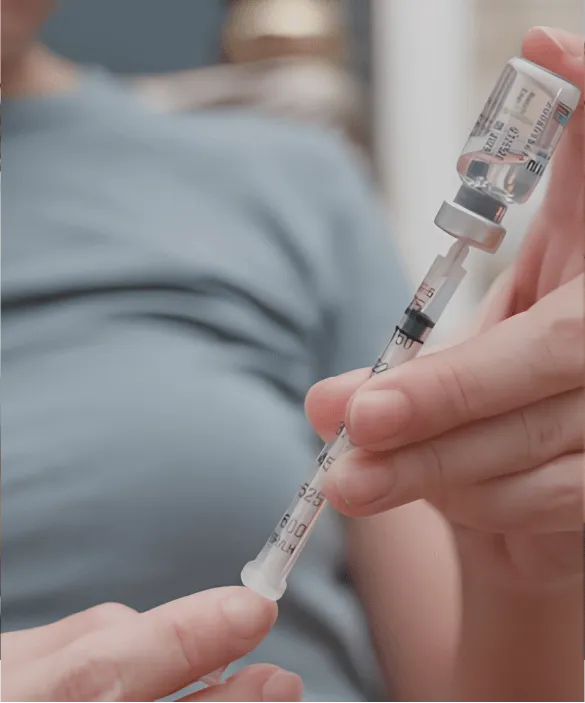

Tirzepatide microdosing is a customized, provider-guided approach that may use a lower or more gradual dosing strategy based on a patient’s goals, tolerance, and medical history. Patients may ask about it for weight maintenance, metabolic support, longevity-focused care, side-effect sensitivity, or a gentler introduction to GLP-1 treatment. There is no FDA-approved Tirzepatide microdosing protocol, so dosing should follow licensed-provider guidance and pharmacy instructions exactly.
Key Points to Consider
- Patients may explore low-dose Tirzepatide for weight maintenance, metabolic support, appetite regulation, or tolerability.
- Dosing should be selected and monitored by a licensed medical provider.
- Social media dose charts and pen-click instructions are not substitutes for individualized medical care.
Why Is Everyone Suddenly Talking About Tirzepatide Microdosing?
The First GLP-1 Wave focused on dramatic transformations. Patients wanted to know how much weight they could lose and how quickly the scale might move.
Now, many of those patients are entering a different phase. They are asking how to maintain weight loss, manage returning hunger, preserve muscle, and avoid feeling locked into an aggressive weight-loss strategy forever.
That shift has Made Low-Dose Tirzepatide a highly searched topic. Tirzepatide microdosing is becoming part of the next GLP-1 conversation–– what sustainable care looks like after the headline-making weight loss.
What Does Tirzepatide Microdosing Actually Mean?
Tirzepatide microdosing usually describes a lower, slower, or more individualized dosing approach discussed with a medical provider. It does not have one universally accepted dose or schedule.
For one patient, the conversation may center on weight maintenance after reaching a goal. For another, it may involve medication sensitivity, appetite regulation, gradual treatment, or metabolic health monitoring.
A Tirzepatide microdosing plan must be defined by its clinical purpose. The number alone does not explain the treatment goal.
Why Are Patients Interested in Low-Dose Tirzepatide?
Not every patient wants the same GLP-1 experience. Some want continued weight loss, while others want stability, appetite support, or a slower transition after reaching their goal.
Patients may also worry about rapid weight changes, reduced energy, gastrointestinal symptoms, or losing muscle along with fat. A maintenance-focused conversation gives the provider an opportunity to review the pace of treatment and what the patient wants to protect.
Others are thinking beyond weight loss entirely. They may be paying attention to glucose trends, insulin resistance, cardiometabolic risk, body composition, or how appetite changes affect their long-term habits. The Tirzepatide Microdosing conversation is where weight loss, maintenance, tolerance, and metabolic health begin to overlap.
Is Tirzepatide Microdosing the Same as Titration?
No. Titration usually describes a structured process of adjusting a medication toward a therapeutic dose while monitoring response and side effects.
The FDA-approved Zepbound schedule starts at 2.5 mg weekly and increases to 5 mg after four weeks. Additional increases may occur in 2.5 mg increments after at least four weeks at the current dose, depending on treatment response and tolerability.
Microdosing generally describes an individualized lower-dose strategy that may have a different goal. The patient may be focused on maintenance, sensitivity, appetite support, or a gradual treatment approach rather than moving toward a standard target dose.
Starter dosing, titration, maintenance dosing, and microdosing are related topics, but they are not interchangeable labels. A provider should clearly explain which strategy is being used and why.
Who Might Ask About Tirzepatide Microdosing?
Patients near or at their goal weight are among the most likely to ask about lower-dose care. They may want help maintaining weight without continuing the same active-loss strategy.
Side-effect-sensitive patients may also bring up microdosing. These patients might have struggled with nausea, bowel changes, excessive appetite suppression, fatigue, or discomfort during dose increases.
Other patients asking about low-dose Tirzepatide may include:
- Patients focused on long-term weight maintenance
- People concerned about rapid weight loss
- Patients trying to preserve lean muscle
- People noticing the return of food noise after reducing or stopping treatment
- Patients returning to GLP-1 care after a break
- Perimenopausal or postmenopausal patients experiencing metabolic changes
- People monitoring insulin resistance or prediabetic trends
- Patients interested in a more gradual treatment experience
- People whose goals extend beyond losing additional weight
These profiles do not determine eligibility. They simply identify some of the reasons a patient may ask a provider about a more individualized strategy.
Why Weight Maintenance Is Becoming the Bigger GLP-1 Question
Weight loss receives most of the attention because the before-and-after moment is easy to see. Maintenance tends to happen quietly, even though it may require more planning than the original transformation. The biggest GLP-1 question is no longer limited to how patients lose weight. Patients also need a plan for keeping it off.
In the SURMOUNT-4 Trial, participants who stopped Tirzepatide after an initial treatment period experienced substantial weight regain, while those who continued treatment maintained and extended their weight reduction. That does not prove microdosing works, but it does show why long-term treatment planning has become such an important conversation.
Patients may notice that hunger changes, food noise returns, or old patterns begin resurfacing after treatment is reduced or discontinued. A maintenance strategy should consider these changes before progress begins to unravel. Patients focused on protecting their results can learn more through California Trim Clinic’s Weight Maintenance & Metabolic Health Program.
What Potential Benefits Are Patients Hoping For?
Patients usually approach Tirzepatide microdosing with a specific goal. Some want help managing appetite without pursuing significant additional weight loss.
Others hope a lower-dose strategy might support weight stability, reduce food noise, or offer a more manageable treatment experience. Patients may also be interested in slower weight changes that allow more attention to strength, protein intake, and body composition.
Common goals discussed in low-dose Tirzepatide conversations include:
- Weight maintenance
- Appetite regulation
- Reduced food noise
- Slower or more gradual weight change
- Metabolic health support
- Better medication tolerability
- Muscle preservation
- Support after reaching goal weight
- A more personalized long-term plan
Why Pre-Filled Pens Are Not Designed for DIY Microdosing
FDA-approved Tirzepatide products are designed to deliver specific labeled doses. Patients should use their device exactly as prescribed and follow the manufacturer’s instructions.
Trying to count pen clicks, partially administer a fixed dose, transfer medication, or follow an unverified online workaround can create dosing uncertainty. A small mathematical or mechanical error matters when a patient is trying to administer a precise amount.
Medication concentration, device design, formulation, and volume all affect the final dose. A viral chart cannot confirm that the patient has the same product, concentration, or delivery system used by the person who created it.
When individualized dosing is being considered, the provider and dispensing pharmacy should give clear instructions. The patient should never have to reverse-engineer an injectable medication from social media posts.
Why Provider-Guided Tirzepatide Dosing Matters
A licensed provider begins with the patient rather than a trending number. The evaluation may include weight history, prior GLP-1 treatment, current medications, side effects, appetite patterns, and long-term goals.
The provider must also consider contraindications, relevant health conditions, and the known risks associated with Tirzepatide. Lower dosing does not erase the need for safety screening or follow-up.
Provider-Guided Care also gives the patient somewhere to turn when the experience changes. Questions about side effects, appetite, weight stability, or dose adjustments can be addressed before the patient begins experimenting alone.
Patients interested in a personalized GLP-1 strategy can Schedule a Discovery Call with California Trim Clinic’s Care Team to learn about the evaluation process and available pathways.
How Do You Know Whether a Tirzepatide Microdose Is Working?
The answer depends on the goal established before treatment begins. A patient pursuing weight maintenance should be evaluated differently from someone seeking continued weight reduction.
Subjective changes may include food noise, hunger patterns, cravings, appetite consistency, energy, and gastrointestinal tolerance. These observations can help the provider understand how the patient is responding between appointments.
Objective measures may include:
- Weight stability or gradual change
- Waist measurements
- Body composition
- Lean muscle preservation
- Blood pressure
- Resting heart rate
- A1C or fasting glucose when relevant
- Other laboratory trends selected by the provider
- Treatment adherence
- Side-effect frequency and severity
Progress should be reviewed over time rather than judged by a single day or week. A dose that appears small on paper may still be too much, too little, or poorly matched to the patient’s actual objective.
What Are the Risks and Limitations of Tirzepatide Microdosing?
Side effects may still occur at lower doses. Tirzepatide can cause gastrointestinal symptoms and carries important warnings and contraindications that patients should review with a licensed provider.
A dose that is too low may also fail to provide meaningful benefit. That can leave patients paying for treatment, delaying a more appropriate strategy, or believing the medication has failed when the plan was never adequately evaluated.
Other concerns include:
- Inaccurate self-dosing
- Confusion between initiation and maintenance dosing
- Unproven online schedules
- Inconsistent administration
- Failure to monitor relevant health markers
- Continued weight loss when maintenance was the goal
- Inadequate nutritional intake
- Loss of lean mass
- Delayed evaluation of side effects
- Using medication after its labeled expiration or beyond-use date
Can Tirzepatide Microdosing Support Weight Maintenance?
Some patients and clinicians are interested in lower-dose Tirzepatide as part of a weight maintenance plan. The idea is to support appetite regulation and weight stability after the patient has completed a more active weight-loss phase.
The evidence currently supports the importance of continued treatment planning, since Tirzepatide withdrawal has been associated with weight regain. It does not yet prove that a particular microdose will reliably maintain results.
A maintenance plan may involve continued medication, dose adjustment, nutrition, resistance training, sleep, stress management, and regular monitoring. Medication is one piece of the structure rather than the entire structure.
Patients approaching goal weight should discuss maintenance before stopping treatment abruptly or waiting for weight regain to begin. California Trim Clinic evaluates these goals through its Weight Maintenance & Metabolic Health program.
Maintenance Deserves its Own Medical Plan. It should never be treated as the forgotten final chapter of weight loss.
How California Trim Clinic Approaches Tirzepatide Microdosing
California Trim Clinic evaluates lower-dose GLP-1 care through a licensed-provider telehealth model. The process begins by understanding why the patient is interested in microdosing and what outcome they are trying to achieve.
Treatment is considered only after medical evaluation. Medication selection, formulation, dosing, and monitoring depend on the patient’s clinical needs, applicable prescribing requirements, and pharmacy instructions.
The program is designed to turn low-dose curiosity into a structured plan. Patients can review California Trim Clinic’s Weight Maintenance & Metabolic Health Program or begin through California Trim Clinic’s Discovery Call Pathway.
Frequently Asked Questions About Tirzepatide Microdosing
Can Tirzepatide microdosing help with weight maintenance?
Some patients may discuss a lower-dose strategy after reaching goal weight, particularly if appetite or food noise begins to change. Individual results and treatment needs vary.
Research shows that stopping Tirzepatide can lead to weight regain for many patients, which supports the need for a maintenance conversation. It does not establish that every patient will respond to a microdose or identify one universal maintenance dose.
Is microdosing Tirzepatide the same as taking 2.5 mg?
Not necessarily. The FDA-approved Zepbound label identifies 2.5 mg as an initiation dose used for the first four weeks, not an approved maintenance dose.
“Microdosing” is an informal term that may be used differently by patients, clinics, and online communities. The provider should define the dose, purpose, schedule, and monitoring plan clearly.
Can I microdose a Tirzepatide pen?
Patients should not alter, manipulate, split, or partially administer a prescribed pen based on online instructions. The device should be used exactly as directed by the manufacturer, prescriber, and pharmacist.
Does a lower dose mean there will be no side effects?
No. Lower-dose Tirzepatide may still cause side effects, and individual sensitivity varies.
How do I start a Tirzepatide microdosing conversation?
Begin with licensed medical evaluation rather than an online dose chart. Explain your treatment history, current dose, side effects, weight goals, maintenance concerns, and what you hope a lower-dose strategy will accomplish.
Patients can explore California Trim Clinic’s Weight Maintenance & Metabolic Health Program or Schedule a Discovery Call with the care team.
The Bottom Line
Tirzepatide microdosing is becoming one of the biggest conversations in GLP-1 care because patients want more personalization. They are thinking about weight maintenance, food noise, metabolic health, medication tolerance, and what happens after the active weight-loss phase ends.
The interest has moved faster than the research. There is no FDA-defined Tirzepatide microdose, and clinical trials have not yet established true microdosing as a standardized strategy.
California Trim Clinic evaluates lower-dose GLP-1 care through a structured, physician-guided process built around the patient’s history, goals, response, and long-term plan.
Medical Disclaimer
This article is for educational and informational purposes only and does not constitute medical advice. Tirzepatide and other prescription medications require evaluation and a prescription from a licensed medical provider.
There is no FDA-defined Tirzepatide “microdose.” Patients should not start, stop, split, lower, increase, combine, or otherwise change any medication based on online content.
Compounded medications are not FDA-approved, and FDA does not evaluate compounded medications for safety, effectiveness, or quality before they are marketed. Availability and prescribing depend on individual medical need, applicable law, provider evaluation, and pharmacy requirements.
Individual results vary. Seek immediate medical care for severe or concerning symptoms.
KEY BENEFITS AT A GLANCE
 UNDERSTAND TIRZEPATIDE MICRODOSING
Learn what microdosing means, how it differs from standard titration, and why there is no FDA-approved microdosing protocol.
 EXPLORE WEIGHT MAINTENANCE OPTIONS
See why patients are asking about lower-dose Tirzepatide after reaching goal weight and what a structured maintenance plan may involve.
 LOOK BEYOND THE SCALE
Understand how appetite, food noise, glucose trends, body composition, and other metabolic markers may shape the conversation.
 AVOID DIY DOSING MISTAKES
Learn why dosing should follow licensed-provider guidance and pharmacy instructions instead of social media charts, pen-click hacks, or online protocols.
To learn more about physician-guided Tirzepatide microdosing, weight maintenance, and metabolic health, explore California Trim Clinic’s Weight Maintenance & Metabolic Health program or schedule a Discovery Call with the care team. Licensed providers offer structured telehealth care nationwide, with individualized treatment plans based on each patient’s goals, medical history, and response to treatment.