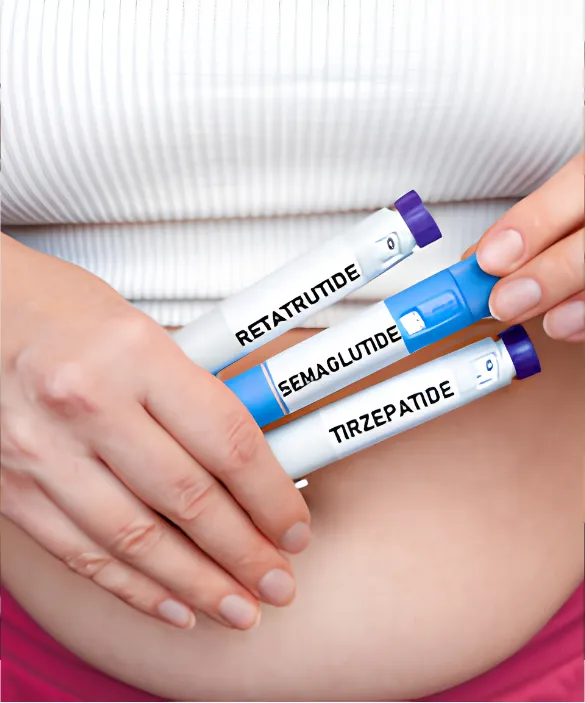


UCHealth reported that Retatrutide helped clinical-trial participants lose about 30% of their body weight, or roughly 70 pounds, over 80 weeks. Retatrutide activates GLP-1, GIP, and glucagon pathways, placing the triple agonist near percentages associated with metabolic surgery and making it one of the most closely watched developments in weight management.
Key Points to Consider
- Per UCHealth, Retatrutide helped participants lose about 30% of their body weight.
- More than 45% of participants receiving the highest studied dose lost at least 30%.
- Retatrutide’s GLP-1, GIP, and glucagon activity may reset what patients expect from next-generation medical weight loss
Retatrutide just pushed the medical weight-loss conversation into territory that once sounded almost impossible without surgery. According to UCHealth, clinical-trial participants lost about 30% of their body weight, or roughly 70 pounds, placing the triple agonist at the center of the next major weight-loss story.
Patients interested in learning whether a provider-guided metabolic treatment pathway may fit their goals can Start California Trim Clinic’s Retatrutide Assessment.
UCHealth’s Recent Report did more than give Retatrutide another promising headline. It moved the investigational triple agonist into the mainstream by highlighting weight-loss percentages associated with metabolic surgery, along with early findings involving knee pain, sleep apnea, and patients who did not respond strongly to earlier GLP-1 therapies.
UCHealth Just Dropped the 30% Retatrutide Bombshell
Per UCHealth, Retatrutide helped participants lose about 30% of their body weight over 80 weeks. The average reduction worked out to approximately 70 pounds, while more than 45% of participants receiving the highest studied dose lost at least 30% of their starting body weight.
Those numbers matter because the medical weight-loss industry spent years celebrating average reductions in the teens and low twenties. Retatrutide has now pushed 30% into the mainstream conversation, creating a new benchmark that future obesity medications will inevitably be measured against.
California Trim Clinic says this is the moment Retatrutide stopped sounding like a distant clinical-trial name and became a full-scale weight-loss headline. Patients can Complete the Assessment to check if they’re eligible.
Why 30% Weight Loss Changes Everything
A 30% reduction in body weight is far beyond what patients historically expected from conventional weight-loss medications. For someone beginning at 250 pounds, that percentage represents approximately 75 pounds, enough to dramatically affect mobility, clothing size, body composition, and everyday function.
For patients who have spent years rotating through diets, exercise programs, appetite suppressants, plateaus, and temporary progress, that number feels seismic. It introduces the possibility that physician-guided medication may eventually produce transformations once associated primarily with bariatric procedures.
California Trim Clinic explores the biology behind stubborn weight in its article on why men over 40 may struggle to lose belly fat despite diet, exercise, and testosterone. Retatrutide is intensifying that conversation by showing how strongly targeted metabolic pathways may influence weight reduction.
Retatrutide Has Entered Weight-Loss Surgery Territory
UCHealth compared Retatrutide’s reported weight-loss results with those commonly seen after metabolic or bariatric surgery. Metabolic surgery frequently produces total body-weight reductions around 20% to 25%, while Retatrutide reached or surpassed that territory in the reported trial data.
Surgery can be highly effective, but it also requires evaluation, preparation, anesthesia, recovery, permanent anatomical changes, and long-term medical and nutritional follow-up. A once-weekly medication approaching similar percentages would represent a major expansion of the obesity-treatment landscape.
Retatrutide may eventually give qualifying patients another path toward dramatic weight reduction. Patients interested in long-term planning after active weight loss can also explore California Trim Clinic’s Weight Maintenance & Metabolic Health program.
The Triple-Agonist Plot Twist Nobody Saw Coming
The evolution of modern weight-loss medication can be understood through the number of hormone pathways each treatment activates. Semaglutide supports medical weight loss through GLP-1 activity, while Tirzepatide activates both GLP-1 and GIP pathways.
Retatrutide adds glucagon-receptor activity, creating a single molecule that targets GLP-1, GIP, and glucagon. Researchers are studying how these three pathways may work together across appetite regulation, blood sugar, insulin response, energy expenditure, and body-weight reduction.
California Trim Clinic breaks down this expanding treatment race in The $100 Billion Weight-Loss Peptide War: Retatrutide vs. Tirzepatide. Semaglutide opened the modern GLP-1 chapter, Tirzepatide expanded it, and Retatrutide just arrived carrying a third metabolic lever.
Why Retatrutide May Become the New Name After Tirzepatide
Searches such as “Retatrutide after Tirzepatide,” “what comes after Tirzepatide,” “Retatrutide for weight-loss plateau,” and “next medication after Tirzepatide” are becoming increasingly important. Patients want to understand where their treatment journey may go when early progress slows or their current strategy no longer produces the same momentum.
Some people experience strong initial weight loss with Tirzepatide and eventually reach a plateau. Others respond, but never reach the level of appetite control or body-weight reduction they expected from the treatment.
California Trim Clinic’s guide on what to do when Tirzepatide stops working explains why plateaus require structured medical review. Retatrutide gives those patients a future-facing conversation to follow and a new name at the center of next-phase metabolic care.
The 30% Result Just Put Retatrutide Ahead of the Hype
Retatrutide has circulated through biohacker groups, patient forums, medical weight-loss communities, and social media for years. Before the latest results, critics could dismiss much of the excitement as premature fascination with an investigational drug.
UCHealth’s coverage changes the temperature of the conversation. Its report brings mainstream medical credibility to Retatrutide’s triple-agonist mechanism, its approximately 30% weight-loss result, and its comparison with metabolic surgery.
California Trim Clinic is not inventing a Retatrutide frenzy from thin air. The clinic is responding to a clinical story that has become too large for patients, providers, and the weight-loss industry to ignore.
Why GLP-1 Nonresponders May Finally Have a Reason to Watch
The dramatic success stories surrounding GLP-1 medications do not represent every patient. Some people experience little or no meaningful weight loss despite using an existing treatment and following the recommended nutrition and activity plan.
UCHealth highlighted Phase 2 Retatrutide findings in which every participant receiving certain higher doses lost at least 5% of body weight. The UCHealth specialist interviewed for the report described that result as unlike anything she had previously seen in a trial.
That finding does not guarantee the same response for every person, but it helps explain why Retatrutide carries so much promise for future obesity care. Patients who feel left behind by an earlier GLP-1 strategy Can Schedule a Discovery Call with California Trim Clinic’s Care Team to discuss their current response and available treatment pathways.
Retatrutide Is Starting to Look Bigger Than Weight Loss
The scale produced the headline, but UCHealth also reported substantial changes involving knee osteoarthritis pain and obstructive sleep apnea. Participants experienced major reductions in knee-pain scores, while those with moderate-to-severe sleep apnea experienced substantially fewer breathing events during sleep.
These findings expand Retatrutide beyond a cosmetic weight-loss conversation. Obesity can affect mobility, sleep quality, inflammation, cardiovascular health, energy, and a patient’s ability to move comfortably through ordinary life.
The most meaningful Retatrutide story may eventually be about how patients function rather than how quickly a number falls. California Trim Clinic’s nationwide telemedicine model helps patients discuss medical weight loss, metabolic health, and treatment progression without requiring traditional office visits.
Retatrutide + MOTS-c Is Already Becoming the Next-Level Search
Patient interest is already moving beyond Retatrutide alone. Retatrutide + MOTS-c has become a high-interest search among people exploring advanced metabolic strategies, mitochondrial function, energy regulation, muscle support, and body composition.
The appeal is easy to understand: Retatrutide is being studied for powerful multi-pathway weight reduction, while MOTS-c is discussed in peptide research related to mitochondrial and metabolic signaling. Direct clinical evidence for the combined strategy remains limited, so any conversation should be individualized and provider-guided.
Readers can explore Retatrutide + MOTS-c and the elite metabolic stack redefining fat loss. They can also review California Trim Clinic’s Compounded Peptide Therapy Program for a broader look at physician-prescribed peptide care.
The 30% Headline Is Rewriting What Patients Expect
Patients familiar with weight-loss goals around 10%, 15%, or 20% now have a new number lodged in their minds. Once UCHealth placed approximately 30% into the headline, the old medical weight-loss ceiling became much harder to accept without asking what may come next.
Those larger expectations are leading patients to ask smarter questions about mechanisms, treatment plateaus, metabolic health, muscle preservation, maintenance, and long-term progression. Dramatic results are only one part of care; the patient still needs a strategy for nutrition, strength, function, and sustainable habits.
Patients approaching their goals can explore California Trim Clinic’s Weight Maintenance & Metabolic Health Program. Flexible financial options may also be available through California Trim Clinic’s payment plans.
What Comes Next for Retatrutide?
Retatrutide is continuing through clinical development, with studies examining obesity, type 2 diabetes, weight maintenance, cardiovascular and kidney outcomes, metabolic liver disease, sleep apnea, knee osteoarthritis, and other obesity-related complications. Additional studies are also examining how Retatrutide compares directly with Tirzepatide.
The newest findings strengthen the possibility that Retatrutide could become a defining future treatment in obesity medicine. The 30% result was not the end of the story; it was the moment the broader public realized how large the Retatrutide story could become.
Patients can stay connected to emerging treatment developments through California Trim Clinic’s telemedicine platform or schedule a Discovery Call with the care team. California Trim Clinic will continue tracking Retatrutide, metabolic health, GLP-1 plateaus, and the treatments shaping the next chapter of medical weight loss.
Medical Disclaimer
This article discusses publicly reported clinical-trial findings for educational and informational purposes. California Trim Clinic is not affiliated with, endorsed by, or sponsored by UCHealth, the University of Colorado, or Eli Lilly and Company.
Retatrutide remains investigational and has not been approved by the U.S. Food and Drug Administration. Clinical-trial findings do not guarantee individual outcomes, and eligibility for any treatment requires evaluation by a licensed medical provider.
Compounded medications are not FDA-approved, and the FDA does not evaluate compounded medications for safety, effectiveness, or quality before they are marketed. Patients should not begin, stop, combine, or change any prescription treatment based solely on online content.
KEY BENEFITS AT A GLANCE
 UNDERSTAND THE 30% RETATRUTIDE RESULTS
See what UCHealth reported, how the clinical-trial percentages were calculated, and why the findings are dominating the weight-loss conversation.
 EXPLORE THE SURGERY-LIKE POTENTIAL
Learn why Retatrutide’s reported weight reduction is being compared with the percentages commonly associated with metabolic surgery.
 SEE WHAT MAKES RETATRUTIDE DIFFERENT
Understand how Retatrutide’s triple-agonist mechanism expands beyond the single- and dual-pathway medications that came before it.
 DISCOVER WHAT MAY COME AFTER TIRZEPATIDE
Explore why Retatrutide is becoming a major search for patients facing Tirzepatide plateaus, limited response, or changing metabolic needs.
UCHealth’s 30% Retatrutide headline has moved the triple agonist into a new class of public attention. The results suggest that next-generation medication may eventually approach weight-loss percentages once associated primarily with metabolic surgery.
California Trim Clinic helps patients understand emerging weight-loss research, current treatment pathways, metabolic plateaus, weight maintenance, and provider-guided peptide care. Patients interested in discussing their goals can Complete California Trim Clinic’s Retatrutide Assessment or schedule a personalized Discovery Call.